Tuesday, 17 February 2026

Suffixes - ness, -al, and -ly

Below is a list of words we have studied for a number of weeks. We have segmented the words into morphemes (parts of a word), discussed the meaning of the morphemes, reviewed the spelling of these words and have used puzzles and games to build comfort and familiarity with their spelling and definition.

Here is an example:

indecipherable

Morphemes: in (not), de (away from), cipher (code/secret), able (can do)

Meaning: not able to take away the code

This week we will have a spelling test on some of the words we studied. If your child wishes to study these words, they may review the list. The work we have done in class should be enough preparation; however, extra review is never a bad idea!

happily

patiently

anxiously

harmlessly

briskly

majestically

expertly

logically

intensely

regretfully

friendliness

loneliness

beneficial

additional

dizziness

bacterial

fitness

comical

natural

emptiness

heaviness

confessional

pictorial

dismissal

negatively


Wednesday, 4 February 2026

Nonfiction Texts

We've been working hard this past month. Students have been learning about nonfiction text features (e.g., headings, pictures, captions, sidebars, etc.) and how they help us while reading. We're also learning how to summarize nonfiction texts.  The success criteria is similar to that of a fiction summary (e.g., brief, only includes important details, written in your own words, etc.).  The challenge can lie in determining which facts are important and which are minor.


The text "How They Were Built," broadly speaking, is about the pyramids and Stonehenge, but the author is trying to explain the ingenuity and careful planning behind these two particular structures.  Therefore, when we summarized, we focused on how these two early societies could build such extraordinary structures without modern machinery and technology.

We will continue developing this skill for a few more weeks. Students will be working in small groups and gradually become independent and summarize nonfiction on their own.

Division

In class we've been exploring division. We will learn different strategies to help us divide.  We started out using fact families to solidify our understanding of the relationship between multiplication and division.


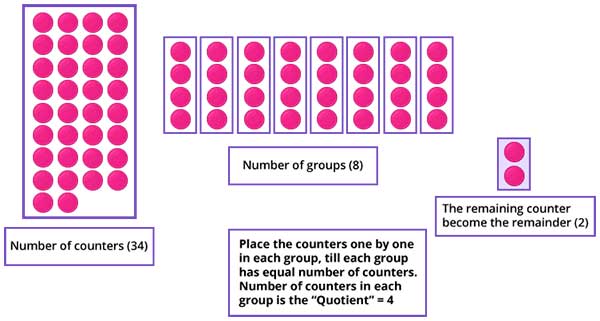
We then moved on to use the same strategy with quotients that included remainders:

Image result for counters for division remainder


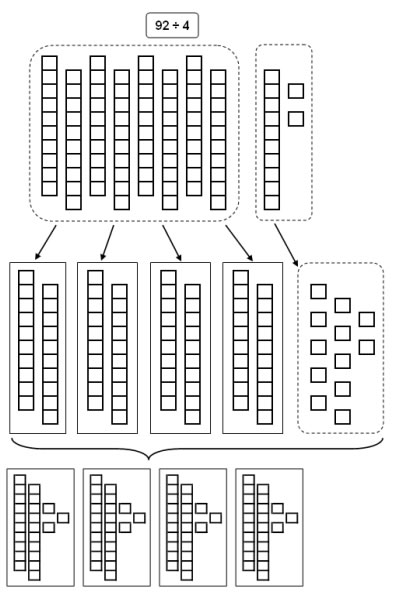
Here is a review with base 10 blocks:

Image result for base 10 blocks for division

I also reviewed how to do short division with the students, which is the same as long division but the steps of multiplying, subtracting and bringing down are not written out.  Instead the math is done mentally and the carrying is noted.  Students can use long or short division to find quotients. The video below describes the steps in short division.


Now we are tackling division questions with a two-digit divisor. I'm seeing some struggle but also progress! This video walks you through the steps. The language I use is a little different but the steps are the same.