Tuesday, 17 February 2026

Suffixes - ness, -al, and -ly

Below is a list of words we have studied for a number of weeks. We have segmented the words into morphemes (parts of a word), discussed the meaning of the morphemes, reviewed the spelling of these words and have used puzzles and games to build comfort and familiarity with their spelling and definition.

Here is an example:

indecipherable

Morphemes: in (not), de (away from), cipher (code/secret), able (can do)

Meaning: not able to take away the code

This week we will have a spelling test on some of the words we studied. If your child wishes to study these words, they may review the list. The work we have done in class should be enough preparation; however, extra review is never a bad idea!

happily

patiently

anxiously

harmlessly

briskly

majestically

expertly

logically

intensely

regretfully

friendliness

loneliness

beneficial

additional

dizziness

bacterial

fitness

comical

natural

emptiness

heaviness

confessional

pictorial

dismissal

negatively


Wednesday, 4 February 2026

Nonfiction Texts

We've been working hard this past month. Students have been learning about nonfiction text features (e.g., headings, pictures, captions, sidebars, etc.) and how they help us while reading. We're also learning how to summarize nonfiction texts.  The success criteria is similar to that of a fiction summary (e.g., brief, only includes important details, written in your own words, etc.).  The challenge can lie in determining which facts are important and which are minor.


The text "How They Were Built," broadly speaking, is about the pyramids and Stonehenge, but the author is trying to explain the ingenuity and careful planning behind these two particular structures.  Therefore, when we summarized, we focused on how these two early societies could build such extraordinary structures without modern machinery and technology.

We will continue developing this skill for a few more weeks. Students will be working in small groups and gradually become independent and summarize nonfiction on their own.

Division

In class we've been exploring division. We will learn different strategies to help us divide.  We started out using fact families to solidify our understanding of the relationship between multiplication and division.


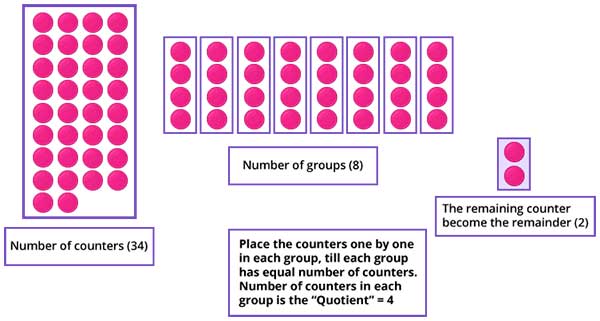
We then moved on to use the same strategy with quotients that included remainders:

Image result for counters for division remainder


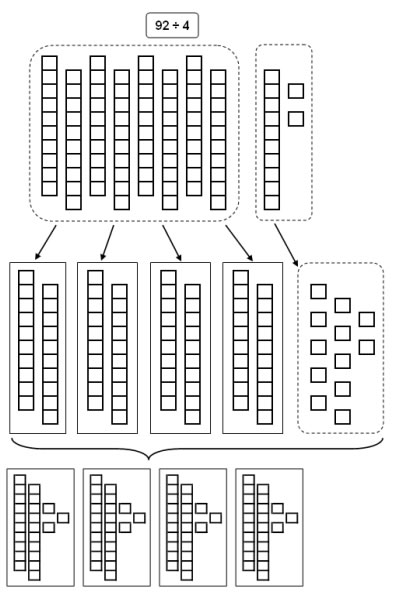
Here is a review with base 10 blocks:

Image result for base 10 blocks for division

I also reviewed how to do short division with the students, which is the same as long division but the steps of multiplying, subtracting and bringing down are not written out.  Instead the math is done mentally and the carrying is noted.  Students can use long or short division to find quotients. The video below describes the steps in short division.


Now we are tackling division questions with a two-digit divisor. I'm seeing some struggle but also progress! This video walks you through the steps. The language I use is a little different but the steps are the same.


Monday, 12 January 2026

Dis-, Dif-, In-, Im-, Ir- and Il- Words

Below is a list of words we have studied for a number of weeks. We have segmented the words into morphemes (parts of a word), discussed the meaning of the morphemes, reviewed the spelling of these words and have used puzzles and games to build comfort and familiarity with their spelling and definition.

Here is an example:

indecipherable

Morphemes: in (not), de (away from), cipher (code/secret), able (can do)

Meaning: not able to take away the code

This week we will have a spelling test on some of the words we studied. If your child wishes to study these words, they may review the list. The work we have done in class should be enough preparation; however, extra review is never a bad idea!

illegible

immerse

impression

irresponsible

inventor

illuminate

immune

irrelevant

immature

inactive

inflate

invest

immobile

inject

inaccurate

immediate

illegal

disconnect

disappear

discomfort

diffuse

difficulty

disfigure

dislike


Social Studies and Science

Just before the two week break, we wrapped up our study of Indigenous communities and the impact of contact with Europeans. The students were engaged and interested during this topic of study. They particularly enjoyed the research project where they created a slideshow.

Last week, we started our exploration of the human body. I am introducing five major organ systems to the students and then they will choose one to learn about in more detail. I think the students will find this inquiry opportunity interesting! We will also be talking about the impact of technological innovations on human health. There are lots of links on Google Classroom if you want to learn more about the organ systems!

Multiplication

This week we will begin looking at multiplying whole numbers.  We will review multiplication facts a bit each day this week. I would encourage many students to review their facts at home using flash cards. Using xtramath is another option; however, you must complete the addition and subtraction sections before you can start multiplication.  Committing these facts to memory will be even more important when we begin division.

Here's a look at the skills we will cover:

Grade 5
-multiply two-digit whole numbers by two-digit whole numbers using estimation, algorithms and other strategies
-divide three-digit whole numbers by one-digit whole numbers
-multiply decimal numbers by 10, 100, 1000 and 10 000 and divide decimal numbers by 10 and 100 suing mental strategies
-use estimation when solving problems to judge the reasonableness of a solution

Shortly, I will introduce the students to "the array" or "area model."  Take a look:


This strategy is called the area model because it uses the idea of area where you find the number of squares it takes to cover a rectangle using length x width. I compare it to an array where you can fit 60 x's across and 20 x's down so the box can fit 60 x's, 20 times. 


The traditional algorithm is another method we'll use to find products.


Stay tuned for more updates and remind your son or daughter to work on their math facts.  Thanks!

Monday, 8 December 2025

Data Literacy

In math, we're begun our data literacy unit. We will be learning how to collect, interpret, organize and display data.  


In grade 5, students will explore the following concepts:

-the importance of various sampling techniques for collecting a sample of data that is representative of a population

-collect data, using appropriate sampling techniques as needed, to answer questions of interest about a population, and organize the data in relative-frequency tables

-select from among a variety of graphs, including stacked-bar graphs, the type of graph best suited to represent various sets of data; display the data in the graphs with proper sources, titles, and labels, and appropriate scales; and justify their choice of graphs

-create an infographic about a data set, representing the data in appropriate ways, including in relative-frequency tables and stacked-bar graphs, and incorporating any other relevant information that helps to tell a story about the data


Here are examples of what we'll be exploring...


A relative frequency table is ideal when there is a large set of data. 
The numbers above could represent how many students read zero books,
one book, two books, etc. in the month of November.
Using the total number of students surveyed, 18, the data 
can be represented as a fraction and percent.


A stacked bar graph is ideal when there are two or more sets of related data.
The bars allow for comparisons to be made among different groups.


An infographic displays data using pictures, numbers and words.


We will look at infographics like this one and analyse the data as well as the format.

Tuesday, 18 November 2025

Addition and Subtraction

For the next while, we'll be working on operations, starting with addition and subtraction. This will encompass practising facts, mental math strategies, standard algorithms and solving problems.


The grade 5's need to:

-use knowledge of numbers and operations to solve mathematical problems encountered in everyday life 

-use the properties of operations, and the relationships between operations, to solve problems involving whole numbers and decimal numbers, including those requiring more than one operation, and check calculations (limited to addition and subtraction)

-represent and solve problems involving the addition and subtraction of whole numbers that add up to no more than 100 000, and of decimal numbers up to hundredths, using appropriate tools, strategies, and algorithms

-demonstrate the knowledge and skills needed to make informed financial decisions

-estimate and calculate the cost of transactions involving multiple items priced in dollars, using various strategies

Mental Math

Below are a few addition and subtraction strategies we will look at to replace the algorithm.  The idea is that students can do these steps in their head or even using paper and pencil.  In some instances, these strategies would be quicker than an algorithm.

Addition Strategies:

A quick and easy strategy that is used most often.
Move part of the value to the other number to make something friendly.

Round numbers to friendly values. Any added or subtracted amounts are accounted for at the end.

Start with the larger number, and add the smaller number in manageable chunks.

Subtraction Strategies:

Make a friendly number to take away from the bigger value;
whatever you add or subtract to make the number friendly must be done to the
 other number to maintain the range between the values.

Start with the large number, and take of the smaller number in manageable parts.

This strategy is helpful with money.
Start with the smaller number and count up until you reach the larger number.
The "jumps" or amount it took to reach the larger number is the difference.


Number Facts

We will rehearse number facts in class.  In order to commit these facts to memory, I recommend daily drills at home.  You can use Reflex, flash cards, xtramath.org or another tool you find useful.

There are missions posted on knowledgehook that can be accessed at home for further practice.

Summarizing

We've been learning how to write summaries of fiction texts.  We talked about why people summarize books, tv shows, movies, events and experiences, and what makes a good summary. Here is the criteria we came up with:
  • a summary is brief
  • it includes only the important details from the beginning, middle and end of the text
  • it leaves out minor details that are irrelevant 
  • it is organized in a logical order (chronologically)
  • it is written in your own words
  • it might include some inferences 
  • it is written in present tense

Here is one for "Outside the Gates," a historical story we read, discussed and summarized together.


We'll continue reading short historical fiction texts the next couple of weeks. Along with some stories to mark Remembrance Day, here are some other titles we will be reading and summarizing:

Two Dollars
The Boy of the Deeps
The Wreck of the Dispatch
Storm at Batoche

You can practice summarizing at home by asking your son or daughter to summarize the chapter they read that night or an article they read on the computer.

Monday, 3 November 2025

Weird Science!

Our two days of science experiments a couple of weeks ago was filled with lots of discoveries. Ask your child how they figured out the mystery powder or why these pennies are so bright?


Friday, 17 October 2025

Patterning

For the next few weeks we'll be exploring patterns! 

We'll be looking at  repeating  patterns,  growing patterns, shrinking patterns and alternating patterns.  In addition to looking at number patterns, we'll analyse geometric patterns.

When solving patterning problems a table of values is helpful.  The table allows students to record the information in an organized way and they can then analyse the values to determine the pattern.

Take a look at this geometric pattern:

Each table records a different pattern.
The first table examines the pattern in the areas.
The second looks at perimeter and the pattern that emerges as each frame adds more squares.


In this problem, students will use a table of values to organize the information.  Usually a table of values has two columns, but in this case, a third column will be used to track the total length of the tape.


Predicting future terms can be done a number of ways including the use of a graph. Once the pattern is recorded in a table of values, the pattern can be graphed. The graph might depict a trend that can be used for future predictions.

Using the graph as a predictive tool,
it is reasonable to guess that the fifth position
will have no tiles. The table and visual
representation support this prediction.


Here's another geometric pattern.  For practice in the next week or two, your child can display the pattern in a table of values up to the 10th frame.  Ask him/her if they can figure out the 20th, without extending the table further.